Blog
Meta's Manus Acquisition Just Got Blocked by China. Every Meta Advertiser Should Be Paying Attention.
China's government just blocked Meta's $2 billion Manus acquisition. Less than 10 weeks after it was embedded into Ads Manager, advertisers who built workflows around it are now left with zero communication from Meta. Here is what you need to know.

AskRocco Team
.png)
Meta's Manus Acquisition Just Got Blocked by China. Every Meta Advertiser Should Be Paying Attention.
By Steve Shea | AskRocco | April 28, 2026
If you logged into Meta Ads Manager sometime in February and noticed a new "Manus AI" option sitting in your Tools menu, you were not imagining things. Meta had quietly embedded its $2 billion acquisition directly into the ad platform used by millions of businesses worldwide. No press conference. No big announcement. Just a pop-up calling Manus your "new AI work partner."
And now, less than 10 weeks later, China's government just blocked the deal entirely.
This is not a small story. This is the kind of story that should make every performance marketer stop and rethink how they build their ad workflow going forward.
What Actually Happened With the Meta Manus Acquisition
Here is the short version for anyone catching up.
In late December 2025, Meta announced the acquisition of Manus, a Singapore-based AI startup valued at over $2 billion. Manus had built a reputation as one of the most capable autonomous AI agents in the world. Not just answering questions, but actually executing multi-step tasks on your behalf. Think automated reporting, audience research, campaign analysis, performance monitoring. All inside one interface.
By February 17, 2026, Meta had already embedded Manus into Ads Manager and rolled it out to all advertisers globally. Agencies and DTC brands started building workflows around it almost immediately.
Then China's National Development and Reform Commission stepped in and blocked the deal, citing concerns about losing key AI technology to the United States amid an intensifying tech war. The acquisition was ordered to be unwound. Two months in. With advertisers already dependent on the tool.
And Meta has said virtually nothing to its ad partners about what happens next.
Why the Manus Situation Feels Like TikTok All Over Again
I have been running a Meta ads agency for 13 years. I have seen a lot of platform disruptions. But this one is giving me serious TikTok deja vu.
Remember when TikTok's US future was thrown into chaos and every brand that had built a significant organic or paid presence on the platform suddenly had to scramble? The brands that got hurt most were not the ones who used TikTok. They were the ones who had let TikTok become their entire strategy with no contingency plan.
The same dynamic is playing out here, just faster.
There was regulatory scrutiny on the Manus deal before most advertisers even got access to the tool. That is not hindsight. That was knowable information at the time of rollout. And yet Meta pushed the integration aggressively, advertisers adopted quickly, and now the rug is getting pulled.
The lesson is not "don't use AI in your ad workflow." AI is table stakes for serious Meta advertisers in 2026. The lesson is: know what you are buying into from every angle before you commit to integrating something into your daily operations. Vendor stability is not a detail. It is a strategy.
Who Is Actually Affected by the Blocked Manus Acquisition
Let's be precise about the scope here, because the numbers being thrown around are misleading.
Technically, all Meta advertisers globally had access to Manus via the Tools listing in Ads Manager. That is millions of businesses. But access is not the same as integration.
The advertisers who are genuinely disrupted right now are the early adopters. The agencies and DTC brands who moved fast, connected Manus to their ad accounts, and started building reporting workflows, audience research processes, and campaign analysis routines around it. For those advertisers, this is not just losing a feature. This is losing an operational layer they built their week around.
Think about what that means practically. Hours that had been automated are now manual again. Reports that Manus was generating are now back on someone's plate. Insights that were surfacing automatically now require a human to dig for them inside Ads Manager.
That is a real cost. And Meta has communicated nothing about timelines, data continuity, or what happens to the Manus integration going forward.
The Bigger Risk of Building Your Ad Workflow on Platform-Native AI Tools
The disruption from this specific incident is frustrating. But the bigger issue is what it reveals about the risk of building your advertising workflow on top of platform-native AI tools that you do not control.
When you build inside Meta's ecosystem exclusively, you are at the mercy of Meta's product decisions, Meta's regulatory environment, Meta's acquisition strategy, and now apparently US-China geopolitics. That is a lot of institutional risk to absorb for a feature inside your ads dashboard.
This is not an argument against AI-powered advertising. It is an argument for building on infrastructure that has accountability, stability, and independence baked in.
The advertisers who are least disrupted by the Manus situation right now are the ones who built their AI capabilities outside of the platform, through tools that are not dependent on any single acquisition deal surviving regulatory scrutiny on two continents.
What Meta Advertisers Should Do Right Now If They Were Using Manus
If you were actively using Manus inside Ads Manager, here is what we recommend:
1. Document your existing workflows immediately. Before access changes or disappears entirely, catalog what Manus was doing for you. What reports was it generating? What analysis was it running? What data connections had you set up? You need to know exactly what you are replacing.
2. Do not wait for Meta to communicate. They have not communicated anything formally to partners or agencies. Waiting for guidance that may not come is how you fall further behind. Assume disruption is coming and plan accordingly.
3. Evaluate your AI stack for single points of failure. If Manus was your only AI layer for Meta ads analysis, this is a good moment to audit the rest of your stack the same way. Where else are you dependent on a single platform-native tool with no fallback?
4. Look at independent Meta ads AI tools built for stability.
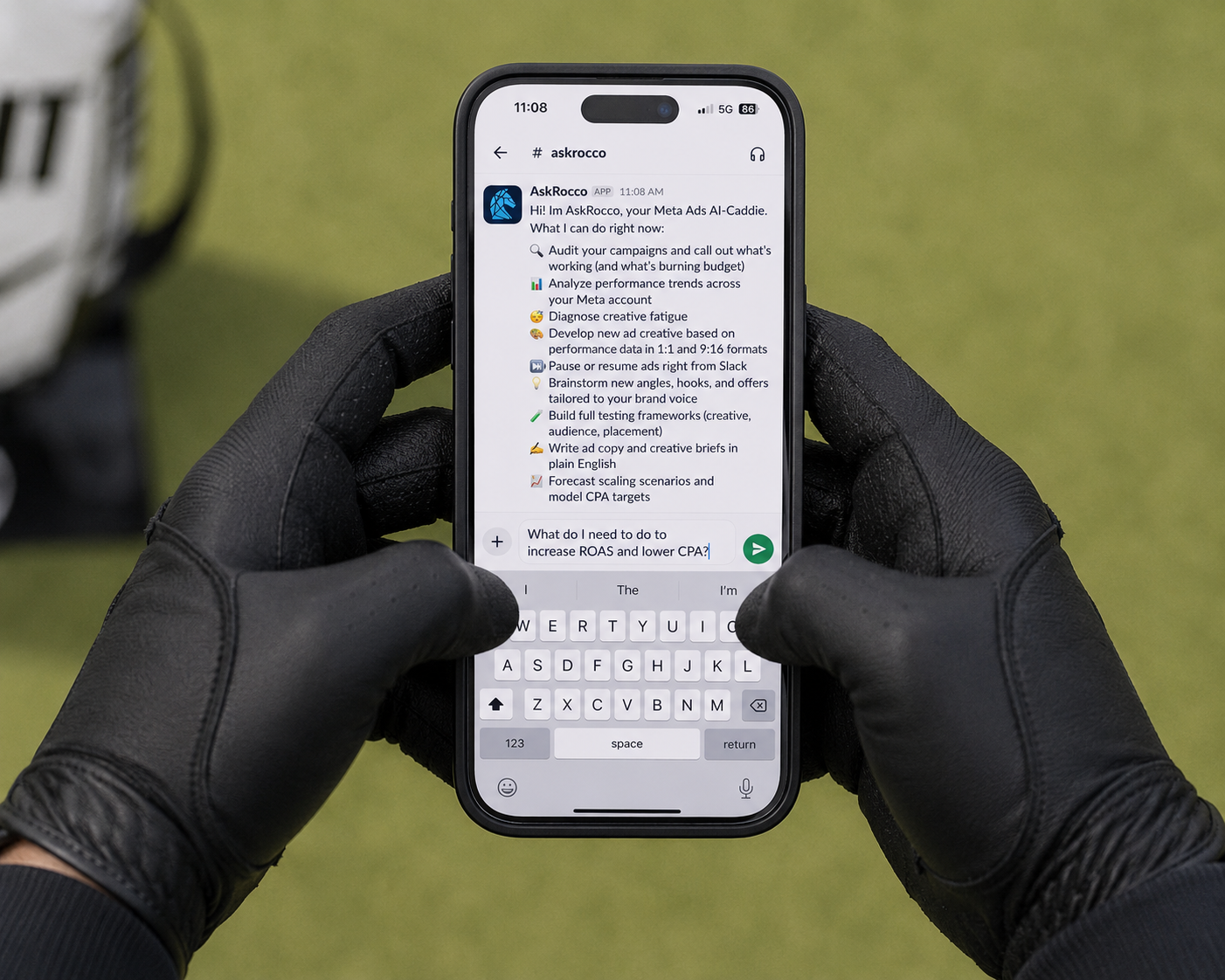
This is where I will be transparent: this is exactly why we built AskRocco. AskRocco is a Meta Ads AI agent that lives natively inside Slack, connects directly to your Meta ad accounts through the API, and operates completely independently of whatever is happening inside Ads Manager. No acquisition risk. No regulatory exposure. No platform-native dependency. If you are an agency or DTC brand that got burned by the Manus situation and needs an AI layer you can actually rely on, check it out at AskRocco.ai.
The Bottom Line on Meta, Manus, and Advertiser Risk in 2026
The Meta Manus situation is a case study in vendor risk that every performance marketer should bookmark. A $2 billion acquisition. A global rollout to millions of advertisers. Ten weeks of adoption. And then a government order to unwind the whole thing, with zero communication to the advertisers left holding the bag.
This is the volatile world we are operating in right now. Global politics, trade wars, and regulatory decisions are now part of your media buying risk assessment. That sounds dramatic. But so does losing your AI-powered reporting workflow because two governments could not agree on a technology deal.
Build your ad stack accordingly.
Steve Shea is the Founder of AskRocco, a Meta Ads AI agent that operates natively inside Slack. AskRocco was built by Everything Clicks, a performance marketing agency with 13 years and $450M+ in Meta ad spend under management. Learn more at AskRocco.ai.